About Concrete Test Moulds
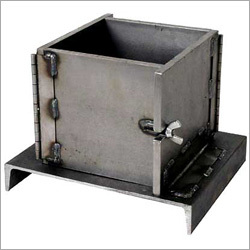
Keeping track with market development, we are engaged in offering our clients an excellent quality range of Concrete Test Moulds. Manufactured from high grade raw materials in our high-tech manufacturing unit in compliance with international quality standards, these Concrete Test Moulds are appreciated for their features like sturdiness, high tensile strength, corrosion resistant finish, accurate dimensions and durable finish standards.
Robust Construction and Easy MaintenanceManufactured from high-hardness cast iron or mild steel, our concrete test moulds feature a rigid structure, ensuring durability and accurate forming of specimens. The corrosion-resistant surface and removable parts enable effortless cleaning and prepare the mould for multiple testing cycles, making it ideal for both laboratory and field usage.
Versatile Applications in Concrete TestingThese moulds are suited for the preparation of concrete cubes, cylinders, or beams essential for strength testing. The standard 100mm cube is commonly used, but various sizes and shapes can be accommodated on request, enhancing adaptability for different testing standards and requirements.
FAQs of Concrete Test Moulds:
Q: How do you assemble and use the concrete test moulds?
A: Assembling the mould is straightforward: attach the removable sides and base plate as per the instructions, ensuring all parts fit tightly. Fill the mould with fresh concrete, compact it appropriately, and allow the specimen to cure before demoulding for testing.
Q: What materials are used in the construction of these moulds?
A: The moulds are constructed from high-hardness cast iron or mild steel, both of which are machined and finished to ensure long service life, dimensional precision, and resistance to corrosion.
Q: When should different specimen shapes (cube, cylinder, beam) be used?
A: The choice of specimen shape depends on the type of strength test needed. Cubes are typically used for compressive strength, cylinders for tensile strength, and beams for flexural strength testing. The required shape can be chosen based on specific project or regulatory requirements.
Q: Where are these concrete test moulds typically used?
A: These moulds are widely used in civil engineering laboratories as well as on construction sites for preparing concrete test samples for quality control and structural assessment.
Q: What is the cleaning process after using the mould?
A: After demoulding the specimen, clean all parts with water and a brush to remove any concrete residue. The corrosion-resistant finish allows for quick and easy cleaning, maintaining the moulds surface integrity for repeated use.
Q: What are the benefits of using a manually operated test mould?
A: Manual operation adds simplicity to the testing process, ensuring consistent results without relying on external power sources. This makes the mould highly reliable and suitable for various testing environments.





 Send Inquiry


 Send Inquiry